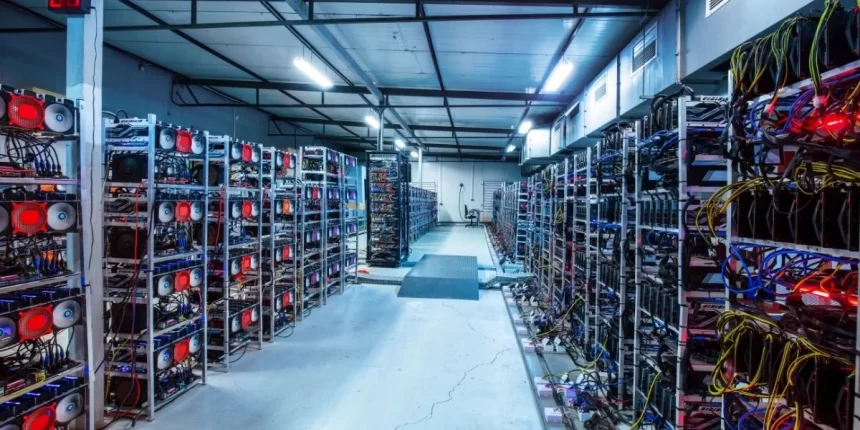
Founded in 2017 and long known as a leading Bitcoin miner in North America, Core Scientific is now preparing for a $3.3 billion bond sale to accelerate its transition into a data center operator focused on artificial intelligence. After soaring energy costs and swings in Bitcoin’s price forced the company to file for bankruptcy in December 2022, Core Scientific reemerged on the Nasdaq under the CORZ ticker in January 2024 following a major restructuring.
Strong push into the AI trend
Driven by growing demand for AI, both data centers and energy infrastructure are being used at full tilt. To keep up with the pace, firms in the sector have turned to the high-yield bond market to secure funding. According to Bloomberg, since the start of the year, companies providing AI infrastructure have conducted $17.9 billion in high-yield bond sales — and Core Scientific has become one of the notable participants in this surge.
Core Scientific is building six new data centers in total. The infrastructure for these centers was allocated through a 12-year lease agreement to CoreWeave, a major competitor. The deal is projected to generate roughly $10 billion in revenue for Core Scientific. In recent months, bond sales linked to data centers backed by tech giants have spiked, with Google-supported projects and CoreWeave alone raising $6.7 billion in funding.
Bond proceeds to reduce debt
Core Scientific plans to use the proceeds from its bond issuance to pay down existing debt and bolster reserves. If construction costs outpace available resources, the company is also considering directing funds toward completing ongoing data center projects. This move highlights once again how capital-intensive the AI sector has become.
Jim Nygaard, Core Scientific’s Chief Financial Officer, noted that the company still holds fewer than 1,000 Bitcoins in its reserves.
Why the shift from mining to AI?
The key driver behind Core Scientific’s pivot from cryptocurrency mining to AI infrastructure is profitability. Following the Bitcoin halving in April 2024, mining rewards dropped from 6.25 to 3.125 Bitcoins per block. Over the same period, the average cash cost to mine one Bitcoin increased, while the cryptocurrency’s price fell from $125,000 to as low as $75,800. Rising energy costs and tougher competition have made it difficult for many miners to survive, pushing them toward alternative revenue streams.
The data centers and long-term energy contracts company operators possess have made them attractive as infrastructure providers for AI technology. Large tech players like Microsoft and Alphabet (Google’s parent company) are increasingly turning to companies like Core Scientific for high-performance data center capacity.
Core Scientific’s rapid transition from mining to AI-focused services has driven renewed investor interest in the company.
The company aims to maximize its profitability by emphasizing AI-related hosting services. Its share price reflects growing market optimism about this new strategy: Core Scientific shares jumped 6 percent on Tuesday and are up 42 percent overall since the start of the year. By contrast, Bitcoin’s price has declined 11 percent in the same period.