The closure of the Strait of Hormuz has rattled energy markets, sending oil prices surging and inflaming fresh fears about inflation worldwide. Meanwhile, reverberations from Middle East hostilities have echoed across global markets, with the volatile world of cryptocurrencies uniquely reacting: While traditional markets have pulled back, most major altcoins notched single-day gains of over 5 percent as the uncertainty rippled through trading screens. On-chain data, however, provides deeper insight into what’s fueling these moves and how investors are adjusting their strategies in this turbulent period.
On-Chain Dynamics Reveal Shifting Crypto Sentiment
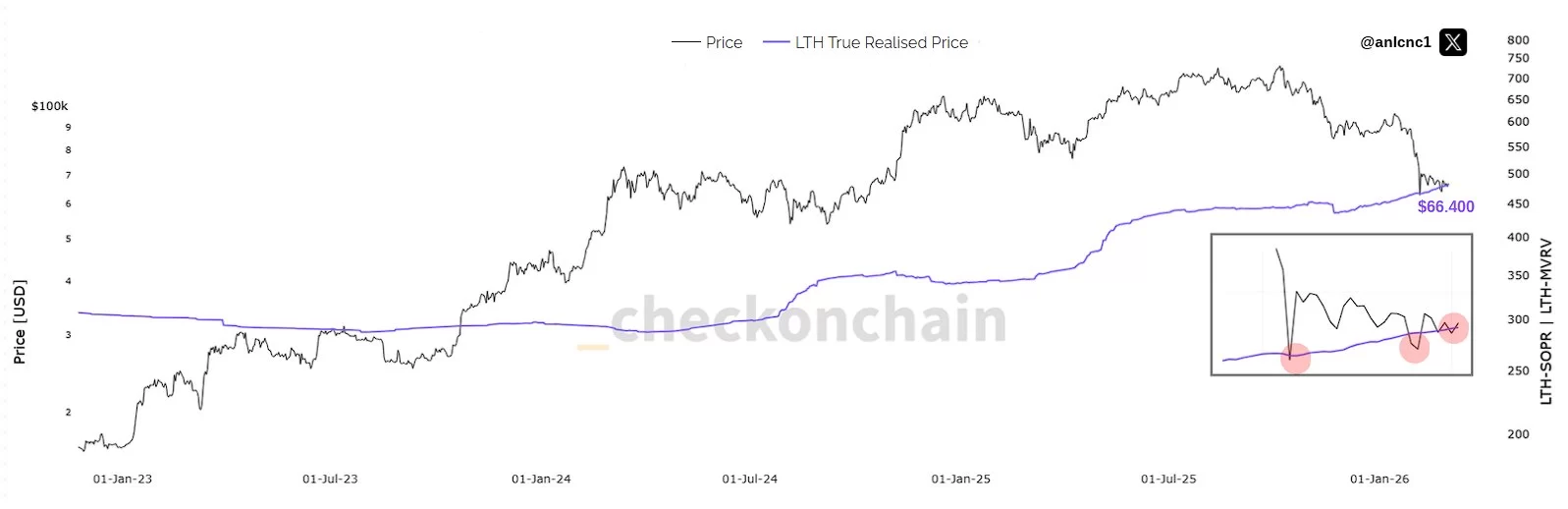
Analysts are closely tracking the realized price for long-term Bitcoin holders—a critical reference point that marks the average cost basis for these investors. Currently, this level sits at $66,400. Bitcoin is attempting to sustain momentum above $69,000, and holding this support could pave the way for a fresh rally. Consistent closes above the realized price would signal that long-term holders have less incentive to sell, a bullish omen for the wider market. Short-term fluctuations aside, Bitcoin has firmly defended the $64,000 range, which reflects the cost base for those holding between 18 months and two years. This persistent support has so far averted deeper corrections below $56,000.
The question now is, what’s the next key level for market confidence? According to analyst Anlcnc1, attention shifts to the next higher cost foundation. The next crucial base is found within the 12- to 18-month investor cohort, who currently average an entry price near $87,000—well above current levels, but a zone to keep in focus for future market turns.
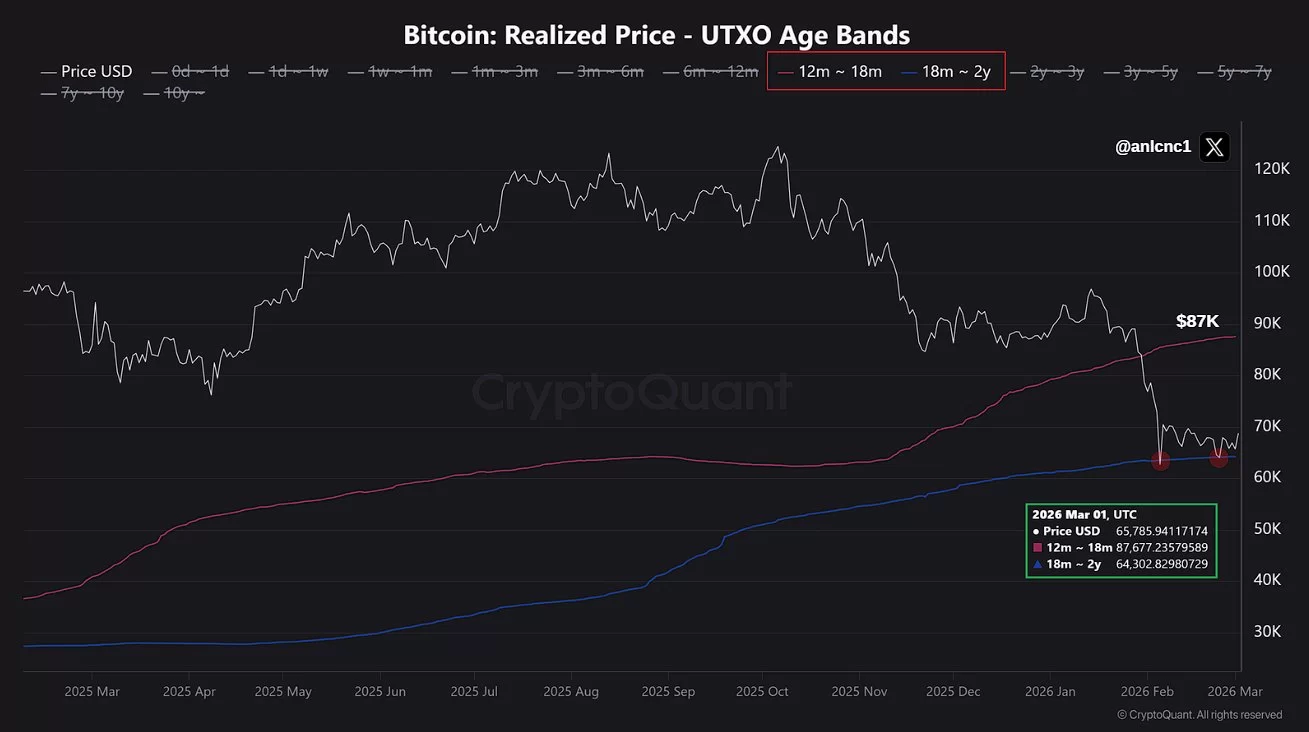
“The next significant cost basis level is among the 12-18 month cohort. While this group’s average holding price is currently around $87,000—making it seem distant in the short run—this remains a critical level to monitor moving forward.”
A prominent on-chain analyst, known by the pseudonym Darkfost, has observed that risk aversion among market participants has reached levels that could soon present contrarian opportunities for aggressive traders.
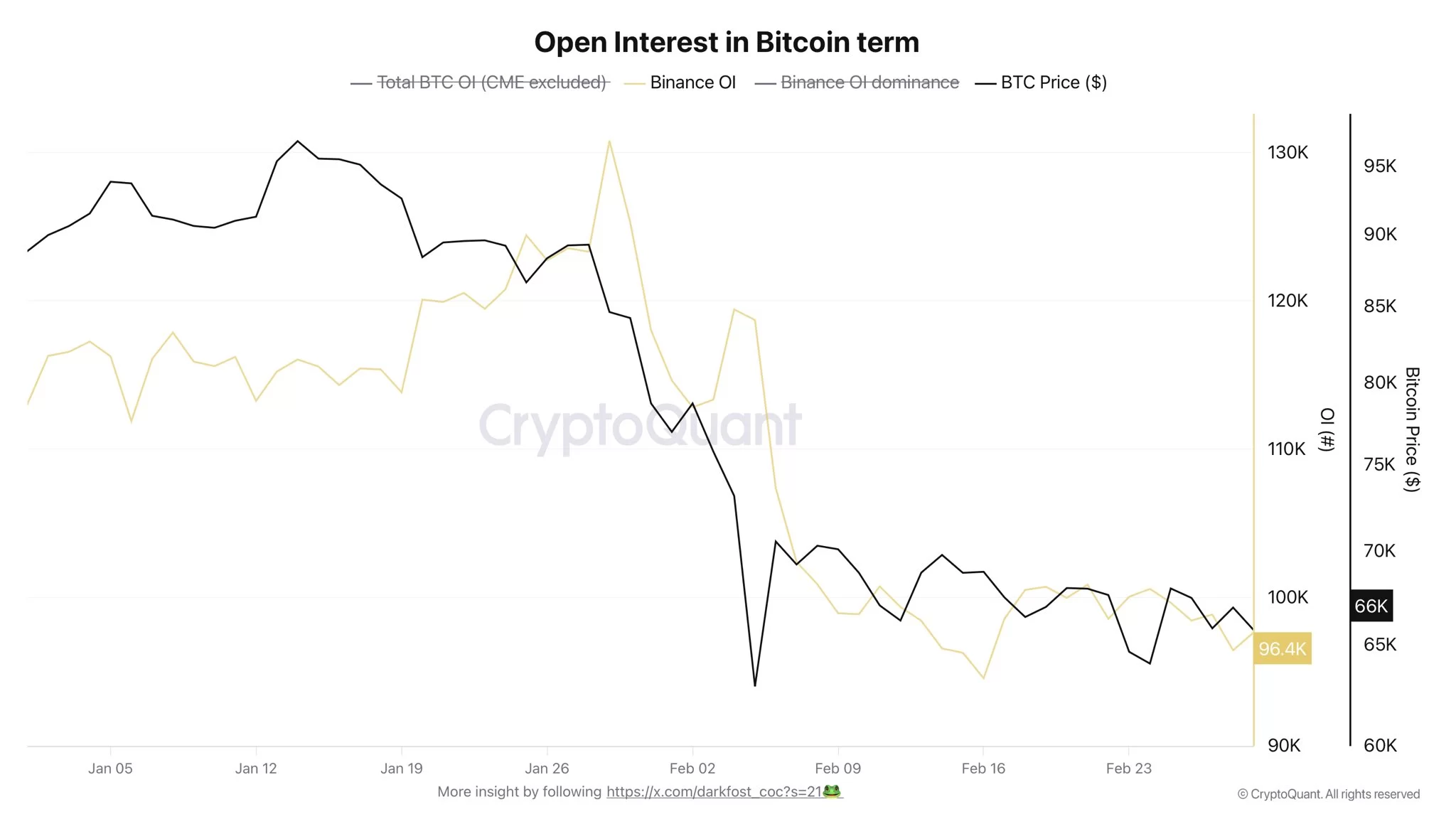
“Open interest on Binance—a barometer for the derivatives market—has dropped by 25 percent as traders have dialed back leverage amid mounting uncertainty. In light of both macroeconomic headwinds and escalating geopolitical tensions, the market has entered a phase discouraging risk-taking, a reality not lost on investors. Ongoing inflation anxieties, further pressured by the intensification of the US–Iran conflict, have only heightened this uncertainty. This surge in risk aversion is evident as we analyze open positions on Binance, the world’s most active derivatives exchange.
Since the start of the year, open interest has declined from 130,800 BTC to just 97,680 BTC—a roughly 25 percent reduction. Binance’s Estimated Leverage Ratio also underscores investors’ newfound caution, as fewer are taking aggressive positions. The ratio, which compares open interest to BTC reserves, dropped to 0.146 compared to the monthly average of 0.155—marking its lowest level since April 2025. Notably, whenever this metric dips below 0.15 in the current cycle, it typically signals the market is entering a pronounced deleveraging phase. Given the broader macro and geopolitical landscape, this risk-off move is not surprising. Yet, the depth of this pullback may be creating new openings for traders willing to bet against the prevailing trend.”
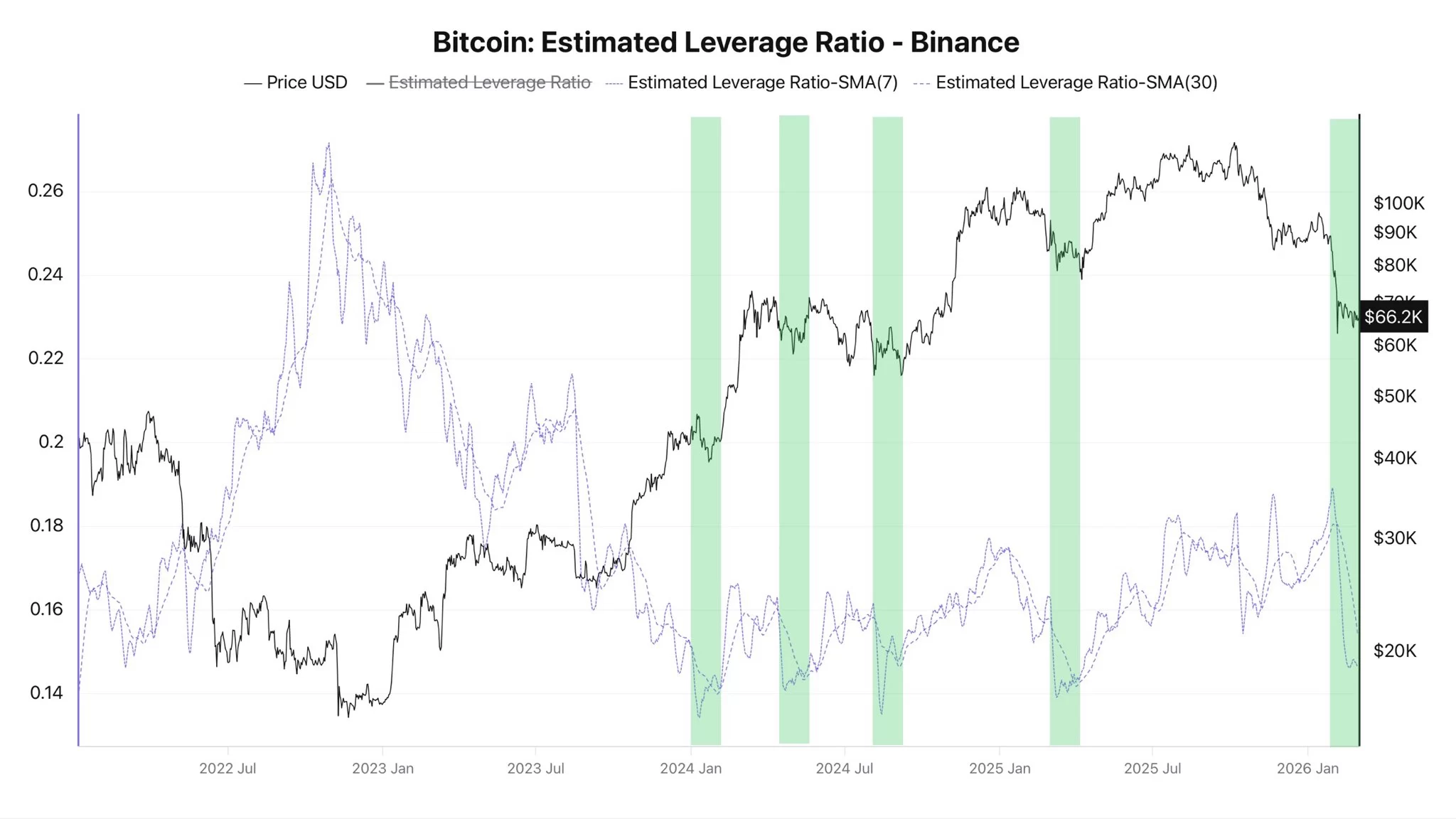
After a dismal February, market participants looked to March for signs of recovery. If historical trends hold, and with many risks seemingly already absorbed, this month could mark the start of a new opportunity window, especially for more aggressive players.
Iran Crisis Disrupts Regional Stability
Recent attacks on US bases in Kuwait have been claimed by Iraqi militant groups, intensifying the standoff in the Gulf. The Iranian Revolutionary Guard issued an unambiguous warning: “The Strait of Hormuz is closed. We will target any vessel attempting to cross. Iran will set on fire every ship that tries to pass.” These statements continue to bolster speculation that oil’s price surge could persist.
“We will not allow oil to leave the region.” – Iran State Television
Former US President Donald Trump weighed in, summarizing Iran’s nuclear ambitions and the US response:
“The US remains active in operations against Iran. We are eliminating the grave threats posed by the Iranian regime, which ignored warnings and pursued nuclear weapons. Their ballistic missile program expanded rapidly, and soon Iran could have possessed missiles capable of reaching the US—a scenario that is simply unacceptable.
We are dismantling Iran’s naval forces and have sunk ten of their vessels. We’re ensuring they can neither fund nor manage armies beyond their borders.
We will achieve victory with ease. This may take four to five weeks, or possibly longer. We will do whatever it takes.”
By 23:46 local time, sirens were sounding in parts of Oman and Jordan, and the US began evacuating its embassy in Oman—signs of escalating tension across the region.
Crypto Winter Thaws as Funds Ramp Up Ethereum Bets
Amid the shocks of the past week, leading digital asset firms Strategy and BitMine disclosed fresh acquisitions of their favorite cryptocurrencies. BitMine announced it had purchased 50,928 ETH in the previous week, and now characterizes this period as a “mini crypto winter” nearing its end.
“Recent US military actions against Iran have amplified geopolitical uncertainty, and the financial effects on both traditional and digital assets will become increasingly evident in the coming weeks. We are continuing to accumulate ETH and optimize returns from our Ethereum holdings.
BitMine views the current downturn as attractive for accumulation, thanks to strengthening fundamentals.” – Tom Lee
The company also revealed it now earns higher-than-average staking rewards and will ramp up efforts to showcase the appeal of its MAVAN and BMNR shares. With its reserves now amounting to 3.71% of all ETH in circulation, BitMine is closing in on its goal to hold 5% of Ethereum’s total supply.