
Global markets were rattled overnight when oil futures opened to a dramatic spike, sending prices racing into the triple-digits. The powerful surge, marked by a prominent “candlestick” move on the charts, erased any skepticism about recent predictions of oil hitting $150 a barrel. As energy costs surge, the threat of revived global inflation is quickly becoming a leading concern for economies worldwide.

 USDT
USDT AAPL
AAPLIran’s Leadership Transition Signals New Risks
On Friday, oil futures closed at $93, but as trade resumed they smashed through the $100 barrier, climbing as high as $119. Prior to the recent Iranian strike, Brent crude had hovered around $70—meaning oil prices have soared by $50 in a matter of days. This sharp rise threatens to reignite inflationary pressures globally, as energy expenses constitute a major component of consumer price calculations.
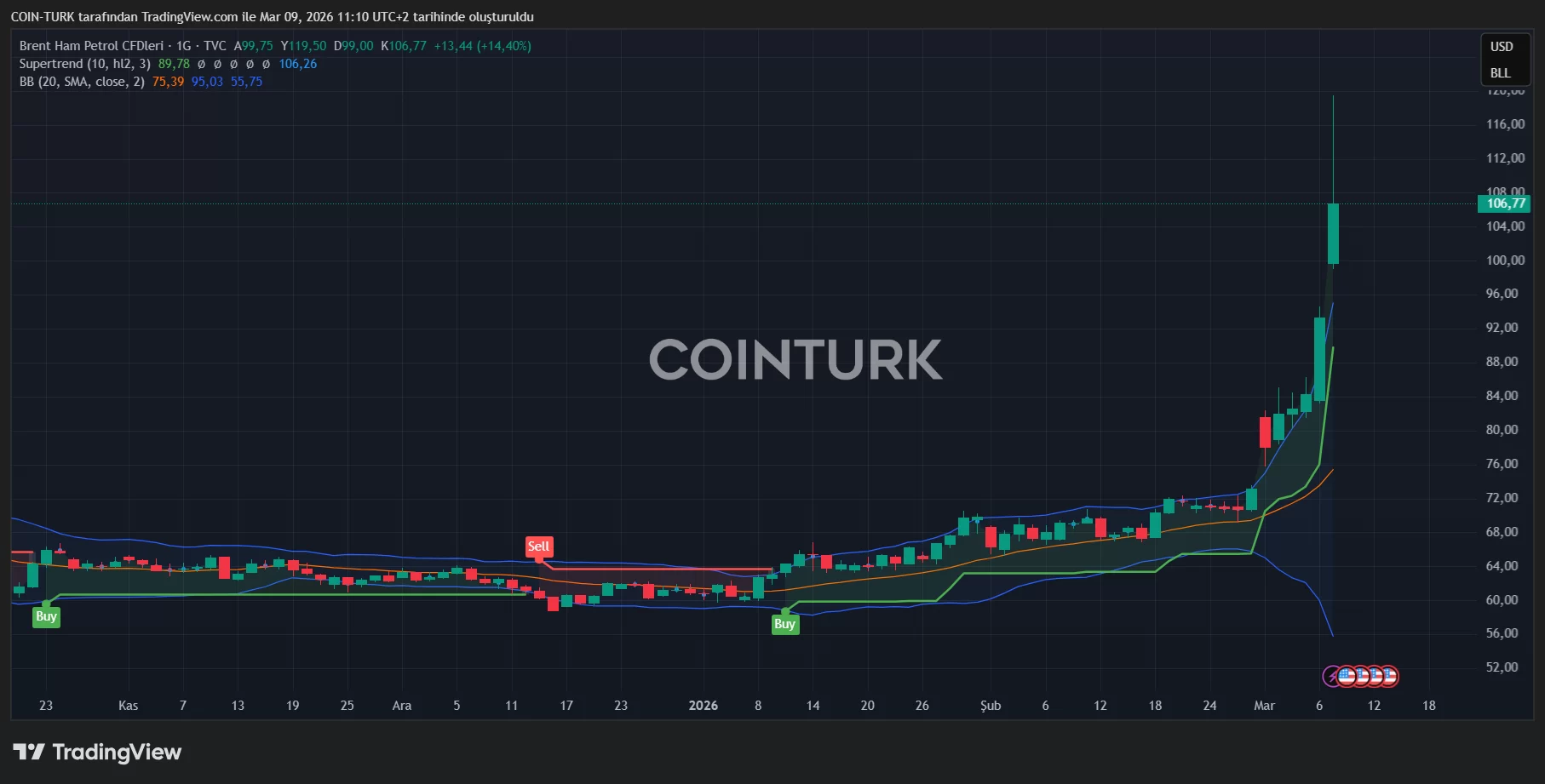
The last 12 hours have brought rapid developments. Following the killing of Iran’s Supreme Leader Khamenei, his son, Mojtaba Khamenei, whose candidacy was previously opposed by former U.S. President Trump, has been named Iran’s new religious leader in what amounts to a transfer of power from father to son. As Iran promises to escalate its focus on energy assets using more advanced missiles—after Israeli and U.S. strikes hit the massive Shahraan oil storage facilities near Tehran—the Islamic Revolutionary Guard Corps warned,
If you think you can withstand oil at $200, then keep playing this game, officials from the Revolutionary Guards declared.
Oil refineries becoming direct targets could drive prices even higher. Mojtaba Khamenei’s ascendance suggests Iran may adopt even more assertive measures going forward.
What is the current outlook? The Group of Seven’s emergency meeting on strategic oil reserves helped rein in crude prices, pulling them back from the $119 peak. Trump has characterized the present turmoil as a short-term sacrifice, but if the United States truly seeks regime change in Iran, the tense standoff may drag on for months. Prolonged high oil prices would likely prompt renewed global interest rate hikes, suffocating risk markets and dampening economic prospects.
Bitcoin and Crypto Assets React to Energy Crisis
Amid escalating unease, Bitcoin briefly fell back to $66,000 but has since reclaimed support at $68,000. For over a month, Bitcoin’s price has been consolidating around the $66,000 level. A decisive move appears imminent: either a sustained drop below $63,000 could trigger a slide toward $56,000, or a push above $75,000 might end the decline and reestablish $80,300 as solid support.
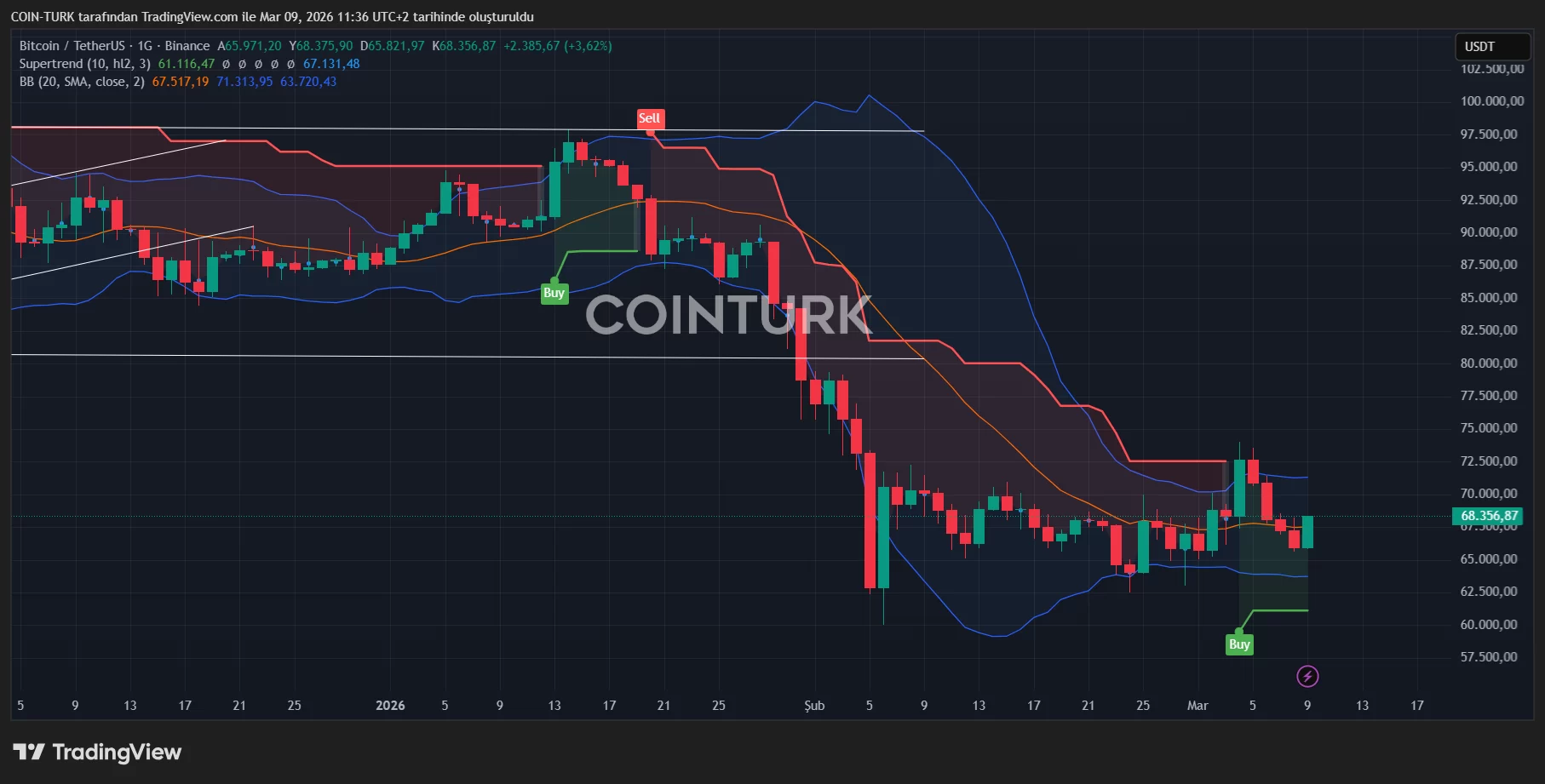
If tensions with Iran persist, a downward break for Bitcoin seems likely. Triple-digit oil prices spell trouble for equities and cryptocurrencies alike, almost guaranteeing a return to tighter financial conditions. However, if Trump can quickly steer the situation toward an outcome he can claim as a victory, he may pivot toward preparing for midterms. Should Iran perceive itself as weakened and return to the negotiating table, a resolution could come within the next two to three weeks.