
While much of the world’s focus has been fixed on the Strait of Hormuz, European officials have turned attention to the escalating risks around Yemen’s Houthis and their potential impact on global trade. As statements from European leaders emerged during the drafting of this article, the possibility of renewed disruptions in the region has started to loom large. With many recalling how the Houthis previously shut down access to the Red Sea, fresh warnings from officials point to new dangers—ones that could ripple across energy, shipping, and digital currency markets.
Houthis and the implications for crypto assets
In their recent remarks, European officials highlighted the Houthis as the next major obstacle to regional stability and commercial flow. According to their assessment, Iran is exerting significant pressure on its allied factions in Yemen to limit maritime activity. Should the Houthis initiate further blockades—as they have threatened to do if Iran’s critical infrastructure comes under attack—the closure of the Red Sea could become a reality.
The Houthis, officially known as the Ansarullah movement, are regarded as one of Iran’s most powerful regional proxies, much like the Shiite militias in Syria. Both Yahya Saree, the group’s military spokesperson, and leader Abdul-Malik al-Houthi frequently voice strong support for Iran, underscoring the close alliance that extends beyond religious ties.
The Red Sea currently serves as a crucial artery for between 12 and 15 percent of global trade. Its closure would have disruptive effects, comparable to a blockage at the strategic Strait of Hormuz. Since the impact of such a closure has not yet been fully priced into markets, the resulting uncertainty could trigger declines in cryptocurrencies. Around 30 percent of all container traffic traverses this corridor; a full shutdown would reroute shipments around the Cape of Good Hope, leading to an effective 10–15 percent reduction in global shipping capacity due to the longer journey times.
Approximately 10 to 12 percent of the world’s seaborne oil—amounting to 7–8 million barrels per day—moves through the Red Sea. Such a disruption could delay Europe’s supplies of refined products like diesel and jet fuel by as much as 15–20 percent. The region also accounts for 8–10 percent of global liquefied natural gas (LNG) trade.
A broad array of goods, from automotive parts and semiconductors to grain and textiles, rely on this trade route, with estimates suggesting 15–35 percent of global supply in some sectors passes through the area. The risk of supply constraints in these categories raises the broader specter of inflation.
For instance, 12 percent of global fertilizers and chemicals transit the Red Sea. Major producers, such as Russia, Belarus, and Morocco, depend on this route to access Asian markets, while Asian suppliers use it to reach Europe. With the Strait of Hormuz handling another 33 percent of supply, any concurrent disruption could halt nearly half of related shipments, imposing further pressure on global food prices. Trends in the Container Freight Index will be closely monitored for signs of mounting risk.
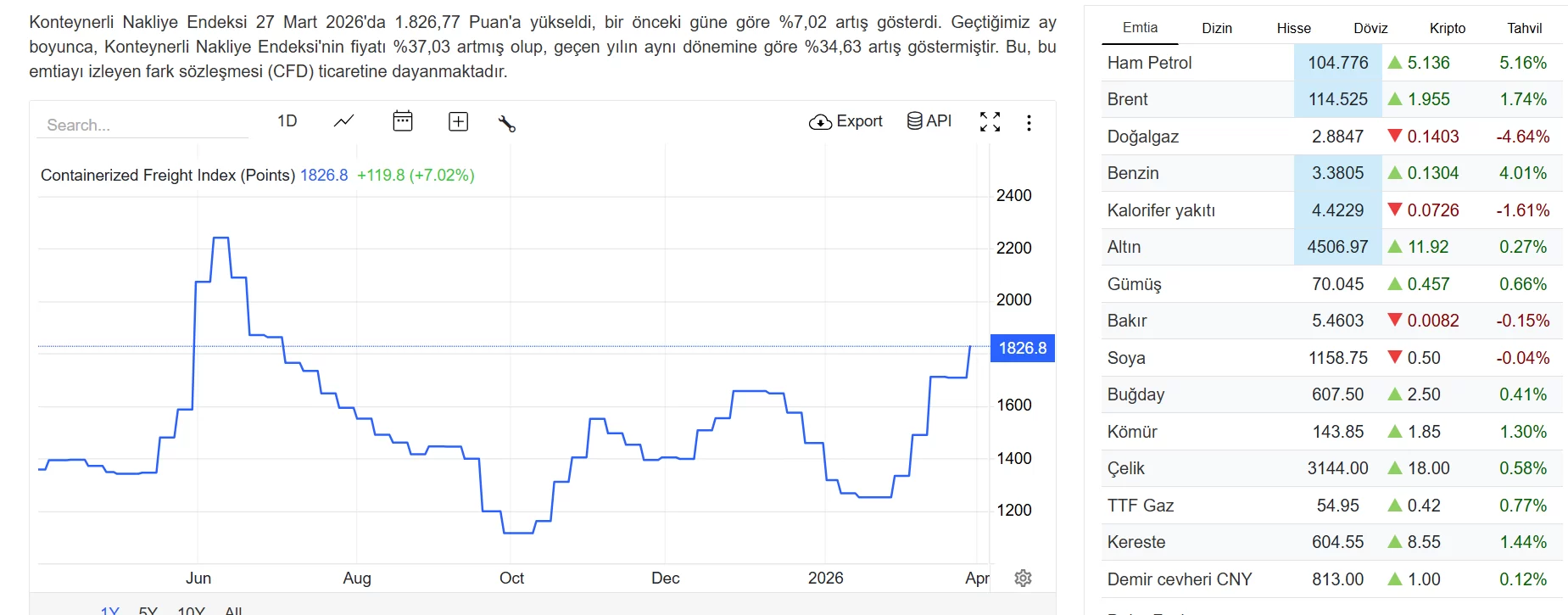
In summary, a scenario in which the Red Sea is completely blocked would spell significant trouble for cryptocurrency markets worldwide due to the far-reaching consequences for global trade and inflation.
Fed commentary and market outlook
John Williams, President of the New York Federal Reserve and a key figure in U.S. monetary policy, also delivered remarks as this article was being finalized. Williams acknowledged that geopolitical shifts in the Middle East have introduced a new level of uncertainty for the global economy, noting that rising energy prices are adding to inflationary pressures.
“Measured by the Personal Consumption Expenditures (PCE) price index, inflation currently hovers around 3 percent, with tariffs contributing roughly 0.5 to 0.75 percentage points. Furthermore, the sharp increases in energy prices resulting from developments in the Middle East are likely to push headline inflation higher in the coming months. However, assuming oil prices decline once conflict subsides, those effects should partially reverse later in the year.
There is significant uncertainty about the path of inflation going forward. Conflict in the Middle East has already begun to manifest as a major supply shock, raising inflation through higher input and commodity costs and also weakening overall economic activity. Recent data, which previously showed no major supply chain bottlenecks, now point to disruptions in the supply of energy and related goods.
Persistent tariff effects and high energy costs will lift headline inflation in the short term. Nevertheless, several positive trends remain: there is little evidence of substantial second-round effects from tariffs on the broader economy, the labor market is not adding to inflationary pressure, and core inflation (excluding imported goods) is heading in the right direction. Importantly, most surveys and market-based indicators, including the New York Fed’s Consumer Expectations Survey, show long-run inflation expectations remain consistent with our 2 percent target.
We are navigating an unusual period for the economy. The risks are substantial, and uncertainty is elevated, especially regarding the economic impact of Middle East conflict.
I am committed to supporting maximum employment and bringing inflation sustainably back to our long-term 2 percent goal. As always, my views on the future path of monetary policy will be shaped by all incoming data, economic outlook, and the balance of risks to our objectives of maximum employment and price stability.”
Williams’s willingness to discuss employment risks—despite current instability—suggests the door remains open for potential interest rate cuts should economic conditions warrant further policy support.