
Key inflation data for the United States is scheduled to be released on Tuesday and Wednesday, with the Consumer Price Index (CPI) and Producer Price Index (PPI) figures in focus. Amid expectations of continued inflationary pressure, Donald Trump has just announced a decisive move aimed at curbing rising prices.
Temporary tax suspension
In a step similar to those taken by countries like Turkey, the United States is now set to temporarily suspend its federal gasoline tax. Previously, Turkey had responded to surging oil prices by reducing taxes, thereby absorbing some of the price increase and trying to moderate the impact on consumers, though the country’s higher tax rates meant that consumers still felt the pinch on gasoline and diesel.
Trump’s plan to tackle inflation
Trump says he will pause the federal gasoline tax for a limited period in hopes of restraining further rises in inflation. This move is designed to cushion Americans from recent increases in energy costs, which have been driven in part by geopolitical tensions and reduced oil supply, particularly in the wake of heightened confrontation with Iran.
“I’m considering restarting the Freedom Project. I believe the United States will need to remove the nuclear threat. Iran’s hardline leaders will eventually back down.
Negotiations with Iran will continue until a deal is reached. The Freedom Project will be part of a larger operation. I will suspend the gasoline tax.”
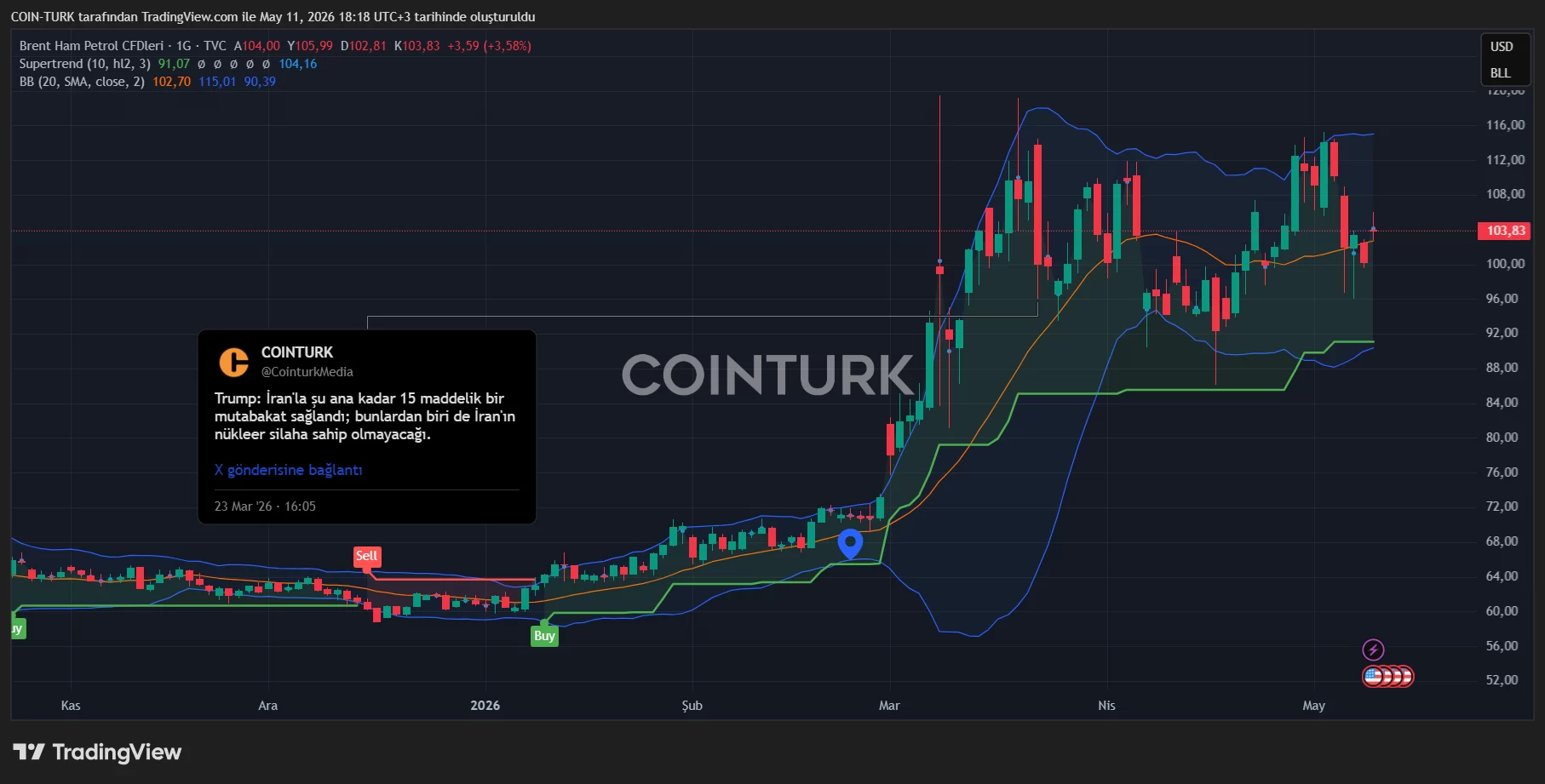
Although suspending the $0.18 federal gasoline tax may have a limited immediate effect, experts estimate that this measure could reduce inflation by up to 0.2%. If Trump follows through with a similar suspension for the diesel tax (currently at $0.244 per gallon), it could lower transportation costs for goods heading to store shelves, thus reducing knock-on effects of energy-based inflation.
The federal government receives between $30 and $35 billion in annual revenue from gas taxes. With the U.S. national debt ceiling fast approaching $41 trillion, forgoing this income could further widen the budget deficit.
Over time, this step may increase pressure on interest rates and potentially contribute to inflation through indirect channels, even if it delivers some immediate relief to consumers.
Additionally, while the tax suspension was being announced, Trump revealed he is scheduled to meet with a group of top military generals to discuss Iran. This announcement has fueled speculation about the possibility of a major military operation looming on the horizon.
The interplay between geopolitical risk, energy prices, and inflation is high on the agenda as markets brace for new data releases and policymakers respond with targeted actions.
Many analysts are watching closely to see if the temporary gas tax suspension will be enough to move inflation figures in a meaningful way, or if volatility in oil markets will continue to drive prices higher.
With upward pressure on energy prices and continued uncertainty in the Middle East, both policymakers and consumers are hoping for measures that bring tangible relief without worsening longer-term structural challenges.