Global financial markets were given a reprieve after the United States and Iran reached a temporary agreement, including measures to keep the Strait of Hormuz open. Although the ceasefire has calmed nerves, the situation remains fluid, with both sides still issuing contradictory statements over the deal’s terms. As a result, while risk appetite has increased, many investors are proceeding with caution.
Market response and shifts in global assets
The news of the ceasefire halted the recent flight from riskier assets. This stabilization sent equities and bonds higher across major markets. Global oil prices saw their steepest decline in years, while European stocks enjoyed their strongest rally in a year. US S&P 500 futures advanced 2.5 percent, Brent crude prices fell 16 percent, and government bonds strengthened worldwide. The yield on the UK’s 10-year bonds dropped by 22 basis points. Concurrently, the US dollar slipped to a four-week low, and gold prices moved higher.
Expectations for Fed policy and oil markets
Investor sentiment has also shifted regarding the US Federal Reserve’s policy outlook. Where markets just weeks ago were factoring in potential rate hikes into 2026, attention has now pivoted to possible cuts. The upcoming US inflation report, scheduled for Friday, is less of a cause for concern given the easing of geopolitical tensions.
As part of the two-week ceasefire, Iran announced it will permit ships to transit through the Strait of Hormuz—a key passage for global oil supplies. This move is expected to alleviate some of the pressure on global energy markets and ease inflation risks. Nonetheless, ongoing differences over negotiation demands, some of which are tied to domestic politics in both countries, continue to keep investors on edge.
The likelihood that the Federal Reserve will cut interest rates this year has risen. At the start of the week, interest rate swap markets saw little chance of a cut, but that probability has now climbed to 60 percent. Before the escalation of hostilities in the region, markets had already priced in two rate cuts.
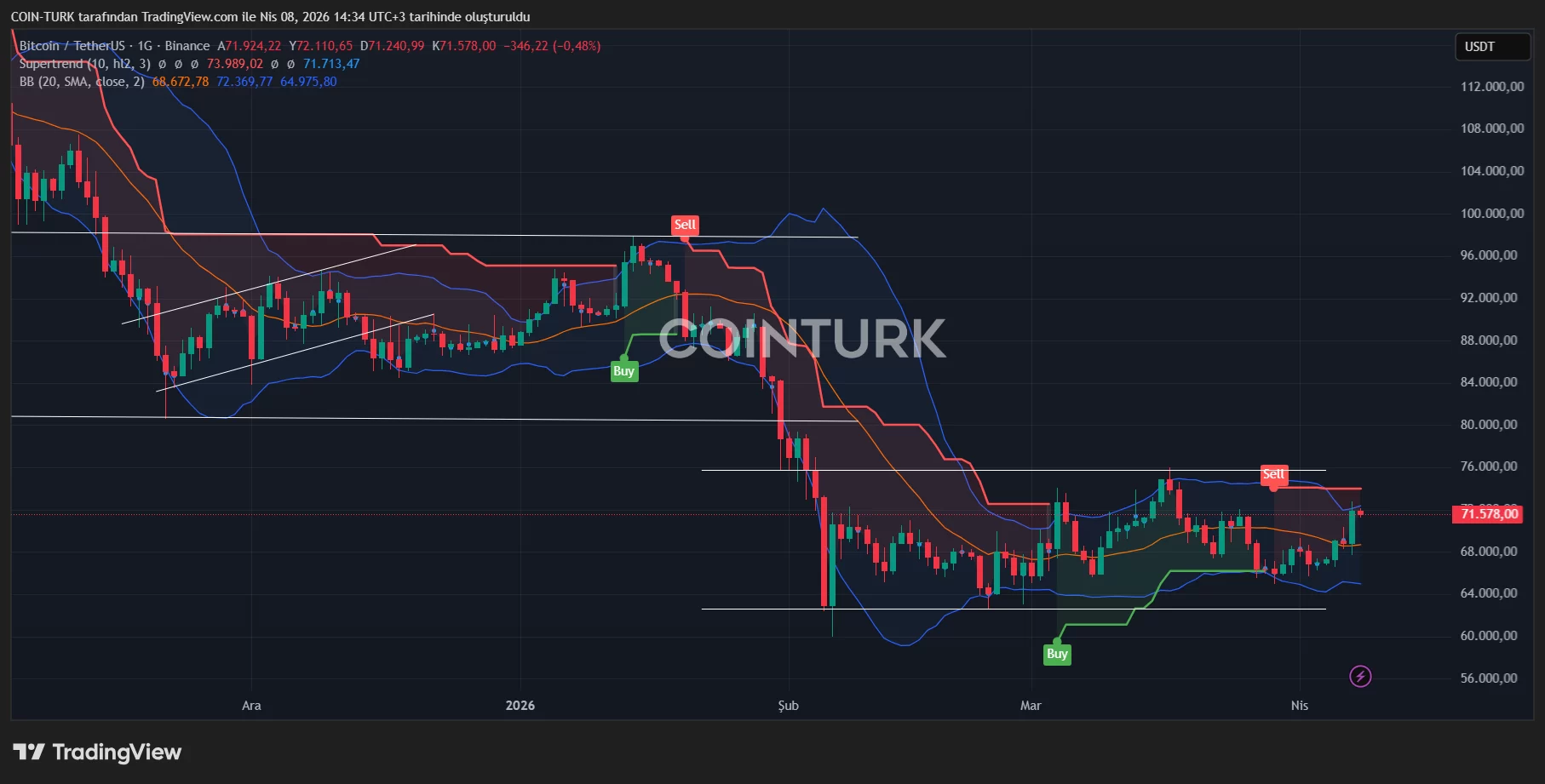
Meanwhile, Bitcoin (BTC) continues to trade above the $71,500 threshold, reflecting renewed risk appetite among some investors.
Trump’s statements fuel continued uncertainty
At the time this article was prepared, President Trump had issued two noteworthy statements. First, he clarified that the agreement with Iran comprises 15 articles, not 10 as previously reported. Second, shortly afterward, he pledged a 50 percent tariff on goods from any country supplying arms to Iran.
“The United States will work closely with Iran, which we have determined is undergoing a highly efficient regime change process. There will be no uranium enrichment, and together with Iran, the US will locate and eliminate all nuclear ‘powders’ buried deep underground (with B-2 bombers). This region, as in the past, remains under strict satellite surveillance (Space Force!). Nothing has been touched since the date of the attack. We are talking with Iran about customs tariffs and easing sanctions, and discussions will continue. Most of the 15 articles have already been agreed upon. Thank you for your interest in this matter.
Effective immediately, the US will impose a 50% tariff on all goods from countries supplying weapons to Iran. There will be no exceptions or exemptions!”
Iran asserts that it has been granted permission for uranium enrichment, while Trump maintains all such activities are prohibited. These contradictions have left observers wondering whether fresh tensions might erupt in the coming hours.