
Bitcoin reclaimed the $69,000 mark to start the new week, fueled by a wave of peace-driven commentary that could open the door to fresh record highs in the coming days. Two crucial US inflation reports—Consumer Price Index (CPI) and Personal Consumption Expenditures (PCE)—are due for release this week, keeping financial markets on edge. With a Federal Reserve meeting looming next week as well, heightened volatility is expected across the board. Lost amid all this market activity is a key question: What’s the current status of crypto exchange reserves—and what does it signal for future trends?
Crypto Exchange Reserves Hit Multi-Year Lows
This February, the crypto sector faced a series of insolvencies, with multiple companies halting operations altogether. The persistent drought in digital asset liquidity has pushed some firms to despair, with little hope remaining even for 2026. Paradoxically, such bleak moments often sow the seeds for a comeback—seasoned market participants are well aware of this cyclical nature.
Exchange-held Bitcoin reserves have already plunged to levels last seen in 2019. Since 2022, Bitcoin balances on centralized exchanges have shown a steady decline, a trend largely set in motion by the collapse of FTX. A chart shared by Darkfost illustrates how exchanges have been rapidly abandoned. In November 2022 alone, more than 325,000 BTC vanished from exchange reserves.
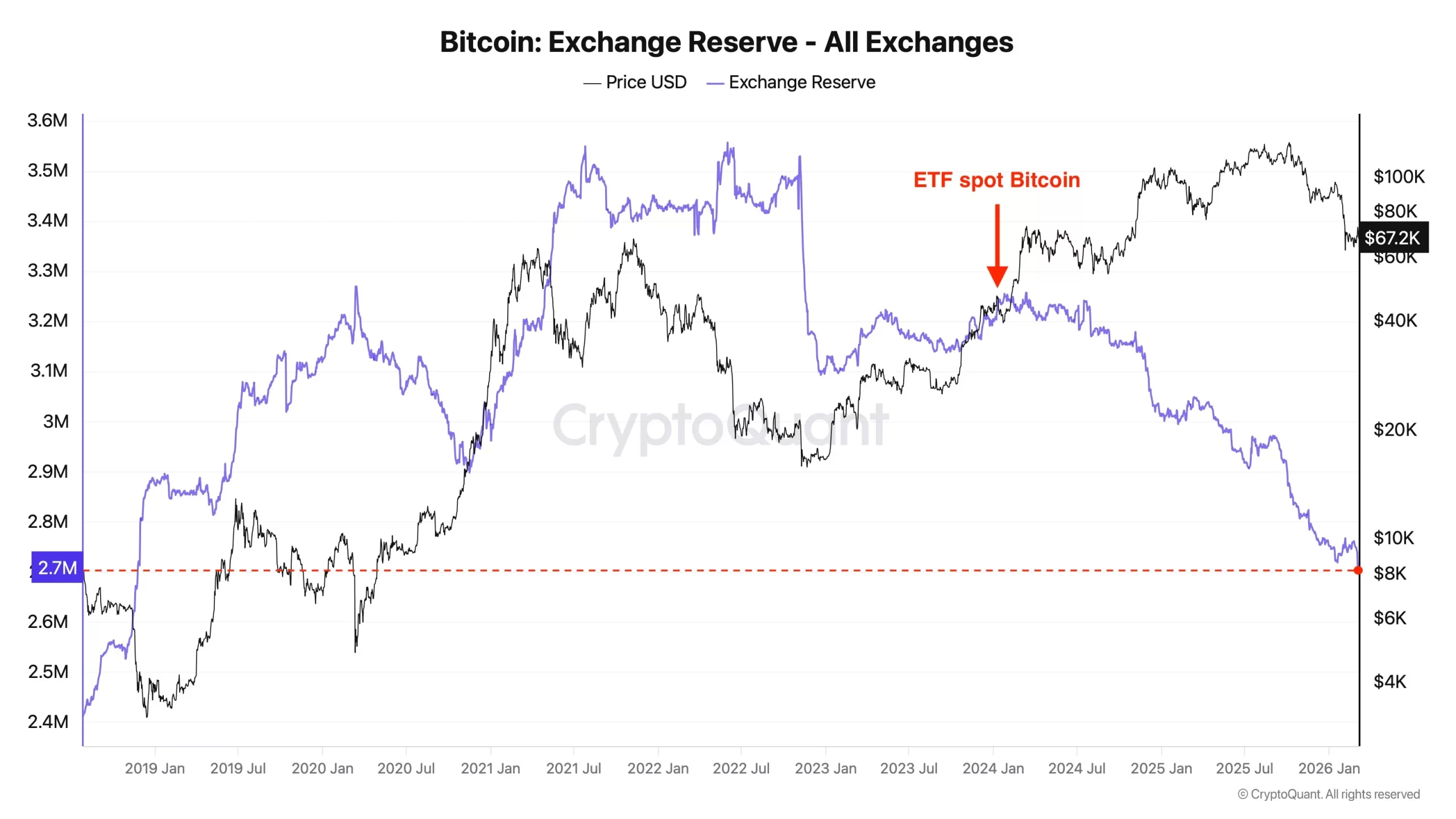
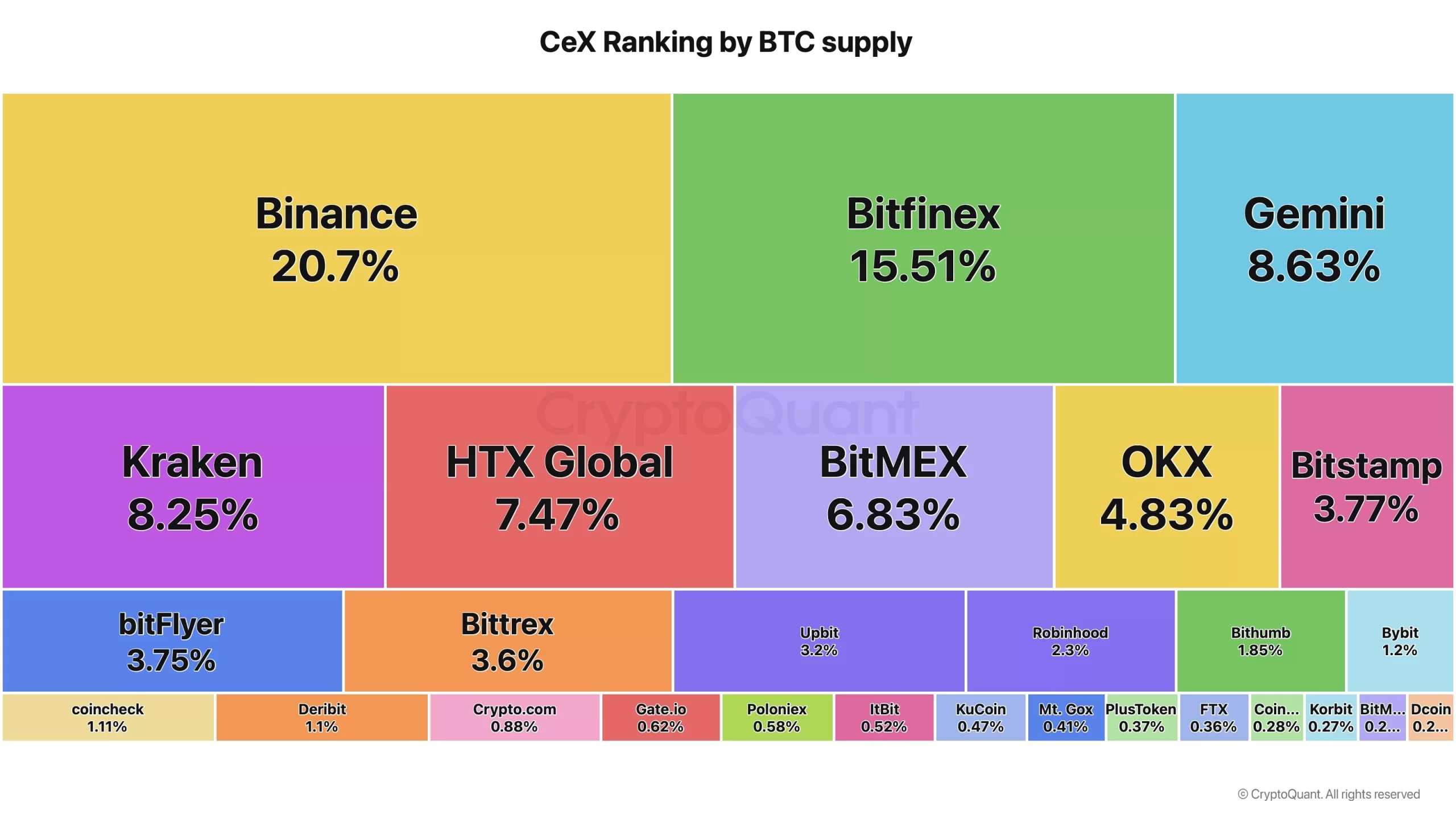
Today, overall Bitcoin reserves on exchanges hover around 2.7 million—a value not seen since 2019. Of this total, roughly 20% is held by Binance, representing the share accessible to individual retail investors across all major centralized trading platforms.
Including platforms popular with professional traders, Coinbase Advanced leads the pack with roughly 800,000 BTC in reserves, Darkfost pointed out. Yet this still falls approximately 200,000 BTC short compared to figures from July 2025.
Beyond the FTX collapse—which prompted many to move assets from exchanges into personal wallets—two additional factors have contributed to reserves returning to 2019 lows. The first was the January 2024 launch of spot Bitcoin ETFs, which arrived when exchange reserves still exceeded 3.2 million BTC. Today, ETFs hold about 1.3 million BTC, equal to 6.7% of the entire supply, effectively removing it from exchange liquidity.
The second important factor has been the expansion of corporate treasury holdings, which now account for more than 1.1 million BTC—about 5% of total supply.
Structural Shifts Set the Stage for the Next Bull Run
Bitcoin balances on exchanges are unlikely to return to their former highs. The rise of both ETF channels and corporate treasuries demonstrates that new groups of investors now prefer to allocate funds away from traditional exchanges. This structural shift brings clear benefits: speculative, exchange-driven swings and sell-side pressure are moderated, and a changing investor profile is beginning to emerge.
Unlike previous cycles, where many followed the lead of large ‘whale’ investors, today’s climate is shaped by entities—like corporate treasuries—reportedly unwilling to sell their holdings, which now represent 5% of the total Bitcoin supply. The substantial remainder is primarily held by generally passive ETF investors, contributing to greater price stability.
Ethereum ETFs offer a telling comparison: although they saw billions in inflows last year, nearly half that volume has since exited. Had these flows gone through exchanges via individual investors, Ethereum’s price could have seen even sharper moves—potentially dipping toward the $1,000 level.
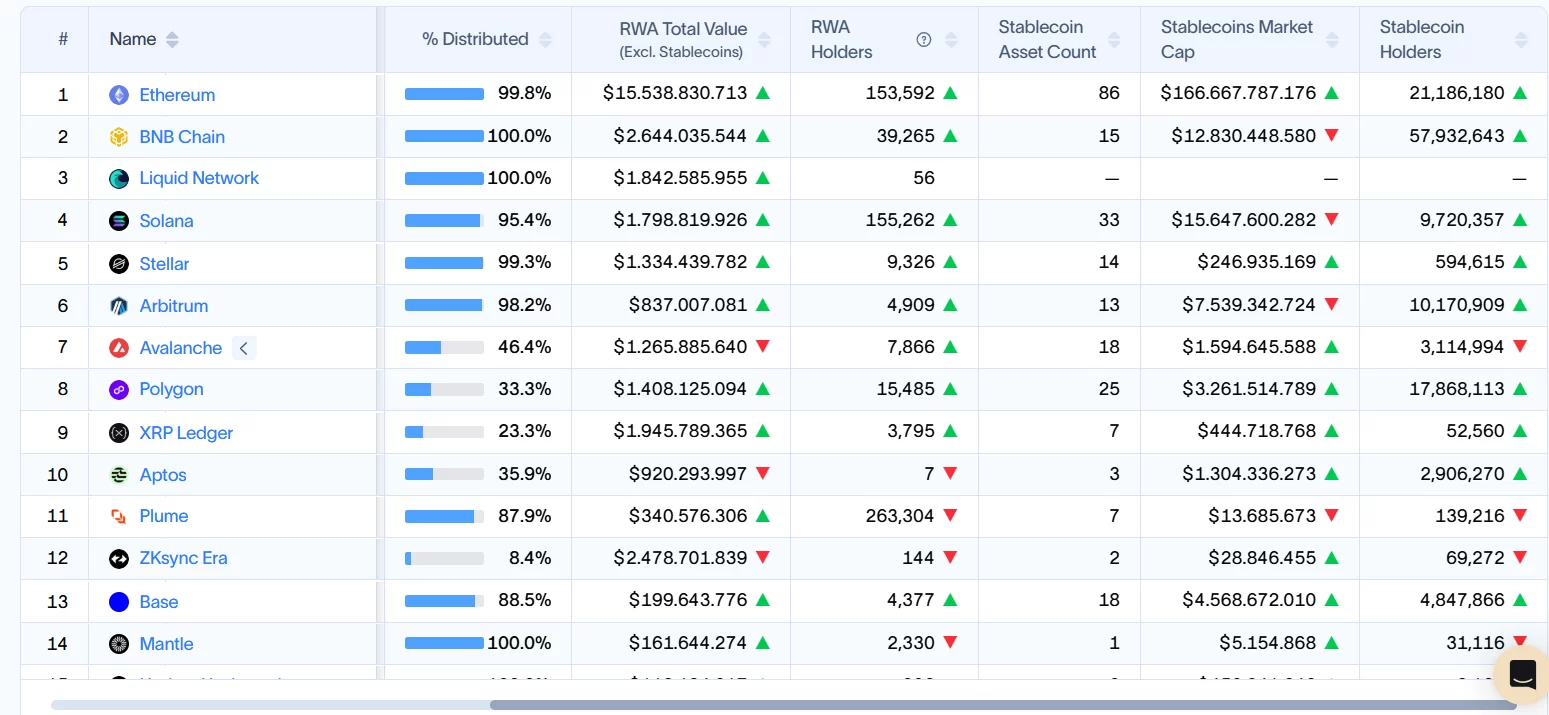
Thus, this structural change is providing a safeguard against severe bear markets. Moreover, the surge in demand from ETFs and corporate treasuries is gradually constricting the available supply, especially as stories around Real World Assets (RWA) and payment infrastructure gain traction. RWA projects have already exceeded $20 billion, quadrupling in just a year. If that pace continues, public blockchains could surpass $100 billion within the year, laying the groundwork for an ambitious target of a trillion-dollar market by 2030.
What does this mean for the future? Every bull market needs a compelling narrative. This trio of structural changes, RWA momentum, and expanding payment infrastructure could soon provide the storyline for the next Bitcoin surge.
Yet a supportive global environment remains crucial. Tariffs, stubborn inflation, and the Fed’s delayed monetary expansion have kept excess liquidity away from crypto, leaving the market in a fragmented bull phase during late 2024 and into 2025. Despite imperfect conditions, US policy support has still driven Bitcoin to new peaks. If the broader environment turns more favorable, a true bull market could unfold. Depending on the outcome of the US elections and political surprises from figures like Trump, this transition may begin as soon as mid-2026 or, in a more adverse scenario, following the midterms at the end of that year.