Fresh concerns once again surround Binance, with speculation about legal scrutiny persisting despite former U.S. President Donald Trump’s involvement. At the same time, Iran’s reported minelaying activities in the Strait of Hormuz have heightened fears of a protracted conflict in the region. While the much-anticipated inflation report has yet to be released at the time of writing, volatility in oil prices has raised expectations for another spike in inflation. Against this complex backdrop, cryptocurrencies are facing renewed challenges from multiple directions.
US Markets React as Global Oil Shipments Face Disruption
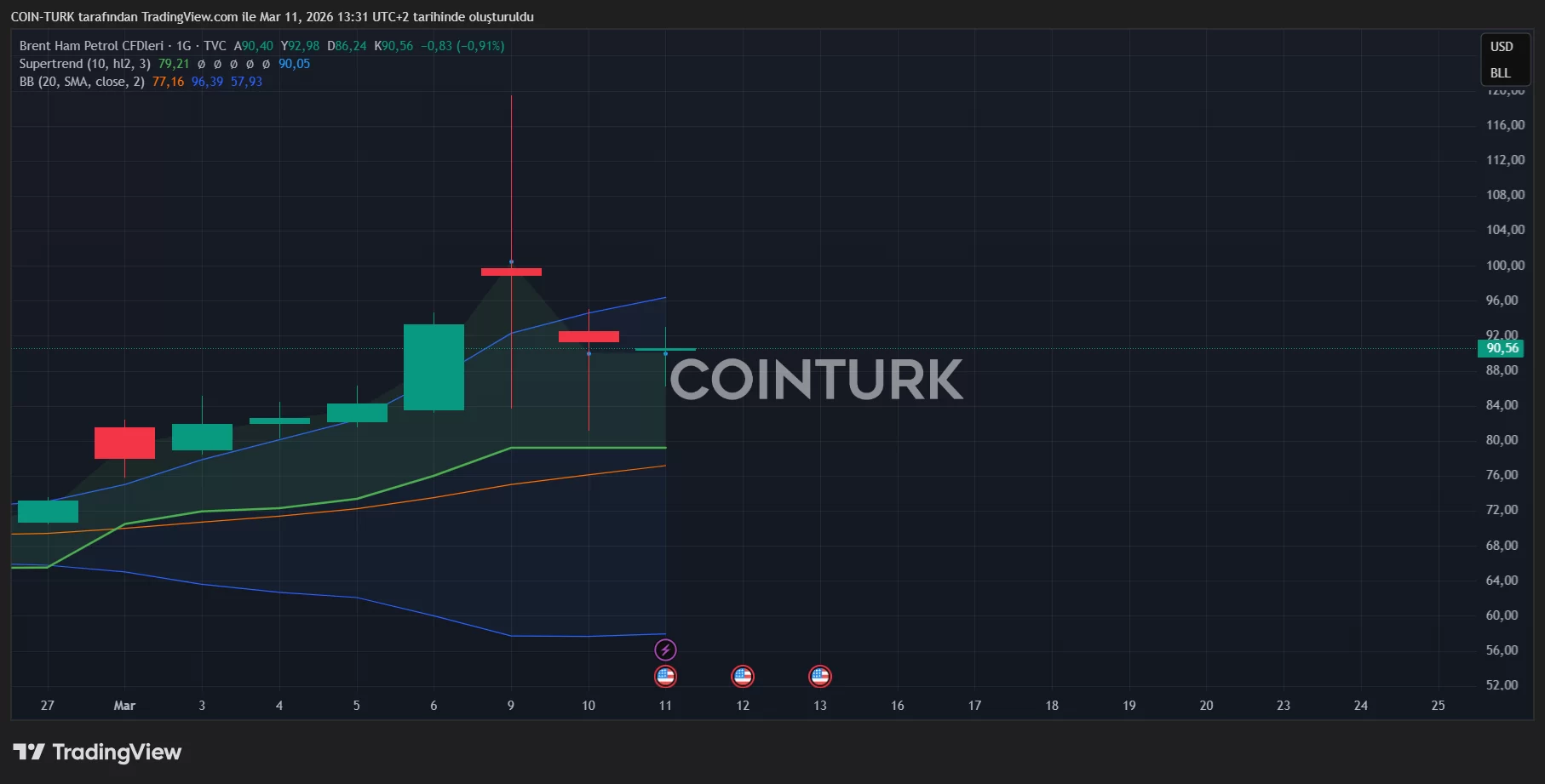
U.S. futures wavered throughout the session, searching for clear direction, while Brent crude hovered around the $90 per barrel mark. Recent reports indicate that Iran is sending millions of barrels of oil to China via so-called “shadow fleets”, undermining the narrative that Beijing could pressure Tehran over supply constraints in the short term. Although unsustainable in the long run, these shipments have extended a tense status quo, fueling concerns that the current situation may drag on far longer than hoped.
Equity Volatility and Broader Market Instability
Stock markets remained highly volatile, with S&P 500 futures oscillating between gains and losses after a previous 0.5% climb. Brent crude surged by 2%, reflecting nervousness ahead of the latest inflation data, which was not yet available. U.S. Treasury yields held steady as traders took a cautious approach. Notably, Oracle shares jumped 10% in pre-market trading, buoyed by strong earnings and an optimistic outlook. While fears of a new AI-driven bubble featured less prominently, any negative surprises from Oracle’s report might have deepened the market pullback.
Meanwhile, the Royal Navy confirmed that three ships were attacked in the Strait of Hormuz and the Persian Gulf. In response, U.S. forces targeted Iranian vessels in an effort to halt further minelaying operations and maintain navigational safety in these vital sea lanes.
Growing anxiety now centers on the risk that localized skirmishes could escalate into sweeping attacks aimed at the region’s core energy infrastructure. Higher oil prices are stoking fears among market participants that inflation will gain renewed momentum and force central banks to adopt even tighter monetary policies.
Can the Downturn in Crypto End Soon?
Cryptocurrencies remain entrenched in a downward trend, and historical patterns suggest that bear markets are rarely brief. Even if a rapprochement with Iran were achieved, different pressures would likely continue to weigh on the digital asset sector. If these cycles follow their usual rhythm, a sustainable market bottom might not emerge until late 2026.
There is no shortage of reasons for ongoing weakness: MSCI could delist crypto treasury companies, and the investigation into Binance risks turning into an industry-wide witch hunt. Even Trump could unexpectedly reverse his stance, announcing a tough crackdown on crypto—having previously profited from it, only to declare himself stricter than President Biden. The ever-changing regulatory and geopolitical landscape has repeatedly shown its capacity to deliver unforeseen shocks that push prices lower.
From Iran’s perspective, Trump is unlikely to want to prolong tensions, especially with midterm elections only months away. A drawn-out conflict risks eroding his support base. Similarly, Iran’s government would rather avoid further damage to its economy and infrastructure, should hostilities escalate. Therefore, as this Friday approaches, diplomatic messages, negotiation rumors, and hints of backchannel talks are expected at this still-early stage of the crisis.