In recent days, the familiar pattern has persisted in the simmering conflict between the United States and Iran: President Trump makes an announcement, hours later Iran denies it, and global markets watch the exchange with skepticism. As the prospect of a ceasefire continues to dominate headlines, all eyes are on the Iranian side’s next move. Meanwhile, analysts at QCP Capital have weighed in on the quantum computing concerns that have captured the attention of the cryptocurrency world. Here’s an in-depth look at the latest developments.
Iran refutes ceasefire claims
Speculation about a possible one-month ceasefire between Iran and the United States recently gained traction, only for Iranian officials to dismiss such suggestions. President Trump renewed his claims of negotiations with the Iranian parliament’s new leader, asserting they had discussed a way forward. However, Iranian leadership categorically denied any regime change or dialogue. Today, Trump asserted that Iran had requested a ceasefire—an assertion Iranian officials promptly rejected.
Such rapidly conflicting statements are raising doubts about the seriousness of either side’s intentions, contributing to a desensitization among market observers. Trump’s tenure has already shaken international confidence in the U.S. with issues surrounding tariffs and abrupt policy shifts. Discussion of potential U.S. withdrawal from NATO has further compounded uncertainty.
An Iranian Foreign Ministry spokesperson addressed the claims directly:
“The allegations that we have requested a ceasefire from Trump are untrue.” – Al Jazeera conveyed the spokesperson’s remarks.
Amid these denials, Russia’s TASS news agency reported that Iran might accept Russia as a mediator. Recent comments from the Iranian president, indicating a possible end to the conflict, suggest both the U.S. and Iran may be stretching the truth—Trump perhaps exaggerating the prospects, Iran choosing to downplay them. While preliminary talks and hopes of a ceasefire persist, the reality is likely more nuanced than either side lets on.
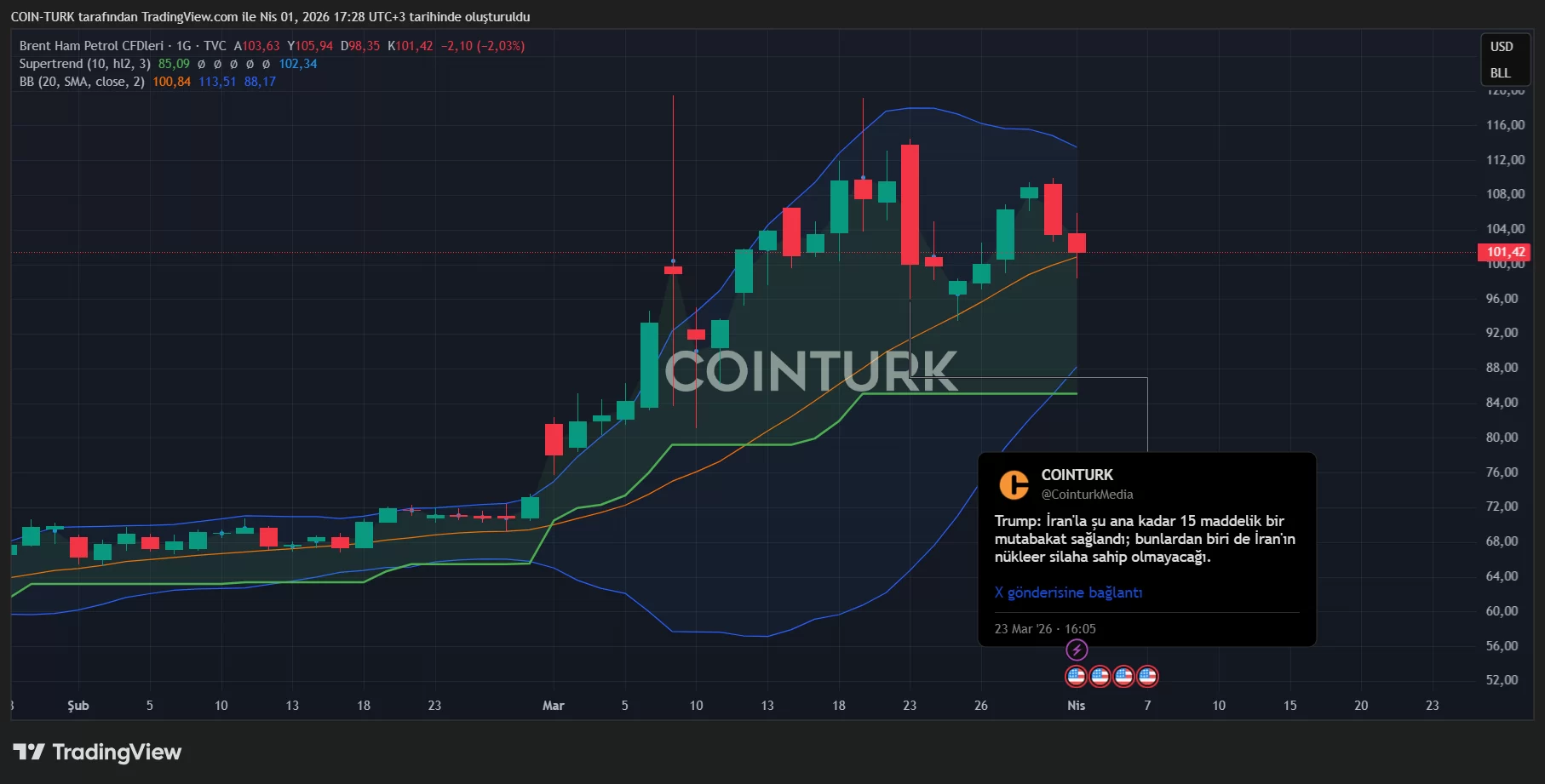
Market reactions offer further insight. A glance at oil price charts reveals a shift toward optimism since the week began, reflecting a gradual perception that Iran is softening its stance. Remarks by Iranian officials and whispers of accepting Russian mediation are perceived as signals that a ceasefire could be inching closer.
QCP Capital: quantum computing poses long-term risk for crypto
Alongside geopolitical headlines, a separate debate is gaining ground in financial technology circles: the implications of quantum computing for digital assets. Yesterday, the longstanding question of quantum risk and its potential to undermine current cryptography systems took center stage. In response to mounting concerns—prompted in part by a Google research paper examining the security of Bitcoin and Ethereum’s elliptic curve cryptography (ECC)—QCP Capital analysts sought to clarify the threat’s immediacy and scope.
“The foundation of ECC security is the Elliptic Curve Discrete Logarithm Problem (ECDLP-256). This problem ensures the safety of private keys and makes deriving them from public keys computationally impractical. However, the same cryptographic standard also protects banking networks, encrypted communications, and the infrastructure of global finance, including systems like SWIFT. Any quantum computing breakthrough undermining ECC would risk not just crypto assets but the entire digital financial sector,” QCP Capital explained.
Google has echoed these concerns, advocating for preparations against quantum threats by 2029 and noting that advancements in algorithms could expedite this timeline. While Google acknowledges that current quantum computing capabilities are insufficient to compromise ECC, it cautions that the technology could pose a practical risk within a few years if progress accelerates.
“From a technological standpoint, we remain far from the computational power needed to break this standard. Google’s paper suggests that 1,200 to 1,450 logical quantum bits (qubits) might suffice to defeat ECDLP-256—significantly fewer resources than previously estimated, corresponding to roughly 500,000 to 1.2 million physical qubits. To date, even the world’s most advanced quantum systems are operating at a fraction of that scale, leaving us about a thousand times short of a feasible real-world attack,” QCP Capital commented.
Given this, QCP analysts reassure that stakeholders in both the cryptocurrency and traditional financial sectors are aware of the quantum risk and are expected to implement appropriate safeguards, significantly mitigating the threat.
“Our view is clear: quantum computing remains a long-term issue that the industry must monitor and prepare for, not an urgent reason to reprice digital assets. Headlines are running ahead of reality. At present, no quantum system exists capable of launching an attack at significant scale. When the quantum threat materializes, the response will require a coordinated, systemic transition across all digital infrastructure—not just in crypto markets,” QCP Capital concluded.