The price of Bitcoin (BTC) has surpassed $79,000 amidst a bearish opening in US stock markets. Meanwhile, BitMine has announced another major Ethereum (ETH) purchase last week. These events prompt questions about the current market status and BitMine’s total assets.
BitMine’s Ambitious Ethereum Acquisition
Bitmine Immersion Technologies (BMNR) recently acquired 41,788 ETH, raising its total assets to 4.285 million Ether. As known since June 2025, the company’s goal is to hold 5% of the ETH supply in reserve, a target they are nearing impressively in only six months. Currently, BitMine owns 3.55% of the ETH token supply, achieving 70% of their target.
Currently, BitMine’s total assets exceed $10.7 billion, including 4.285 million ETH tokens, $586 million in cash, and other assets. In their announcement today, the company stated that BitMine leads crypto treasury competitors with its rapid per-share crypto NAV growth and the high trading liquidity of BMNR shares. Remarkably, BitMine stands as the 105th most traded stock in the US, with a daily trading volume of $1.1 billion based on a five-day average.
Market Sentiments and Ethereum’s Price Dynamics
Bitmine’s CEO, Tom Lee, remains optimistic despite recent ETH price fluctuations from ~$3,000 to ~$2,300. This drop coincided with an all-time high in Ethereum’s daily transaction volume of 2.5 million and active addresses peaking at one million daily in 2026. Lee notes robust growth in Ethereum’s on-chain activity and fundamental metrics over recent months, despite the price decline.
During the crypto winters of 2021-2022 and 2018-2019, Ethereum’s transaction activity and active wallets decreased, contrasting with the growth observed in the past 12 months. Consequently, Lee reassures that they do not anticipate a bear market.
Factors deemed non-fundamental explain Ethereum’s price weakness, such as crypto leverage effects failing to return post-October 10. Additionally, rising precious metal prices serve as a ‘vortex’ sapping risk appetite for crypto. Gold prices appear to follow patterns reminiscent of the 1979-1980 period, with historical significant drops marking short-term peaks.
Following Bitcoin’s (BTC) recent decline, ETF investors should view these losses as opportunities. Despite a slight recovery from $74,000, concerns arise if $82,000 isn’t reclaimed, signaling further lower peaks.
In South Korea, concerns over companies’ AI spending contrast with Asian AI bubble discussions, amid the negativity during Wall Street’s corporate earnings season affecting cryptocurrencies worryingly.
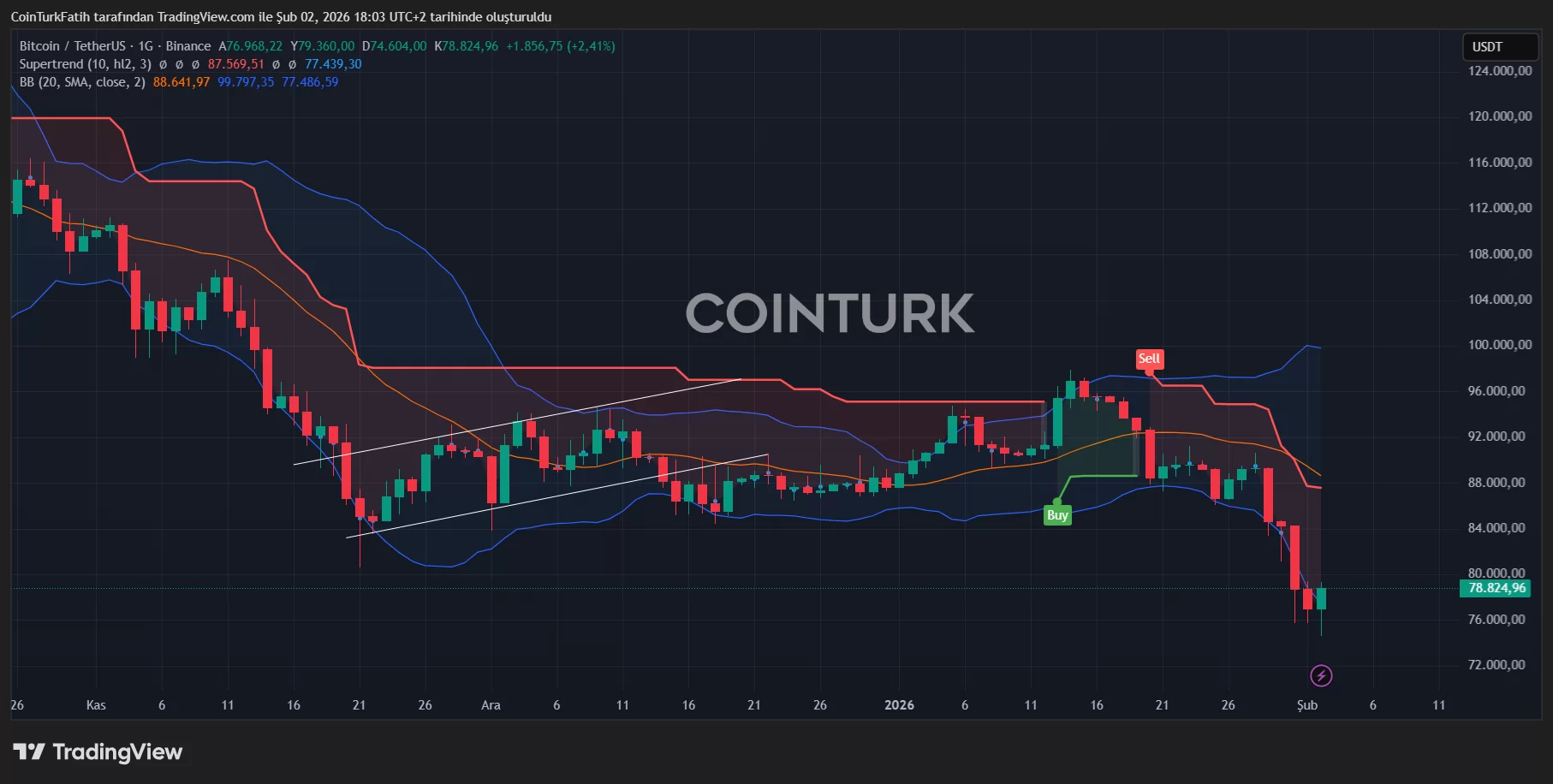
For a genuine reversal, Bitcoin must at least reclaim $80,600, with the 93-98,000-dollar range necessary to resume an upward trend. Given the distant prospect of overcoming the recently tested $98,000 resistance, investors prudently prefer to observe developments from the sidelines.
This week, a potential nuclear agreement is expected to be discussed in Istanbul between the US Special Envoy Witkoff and Iranian Foreign Minister Araghchi, potentially easing ongoing geopolitical anxiety.