
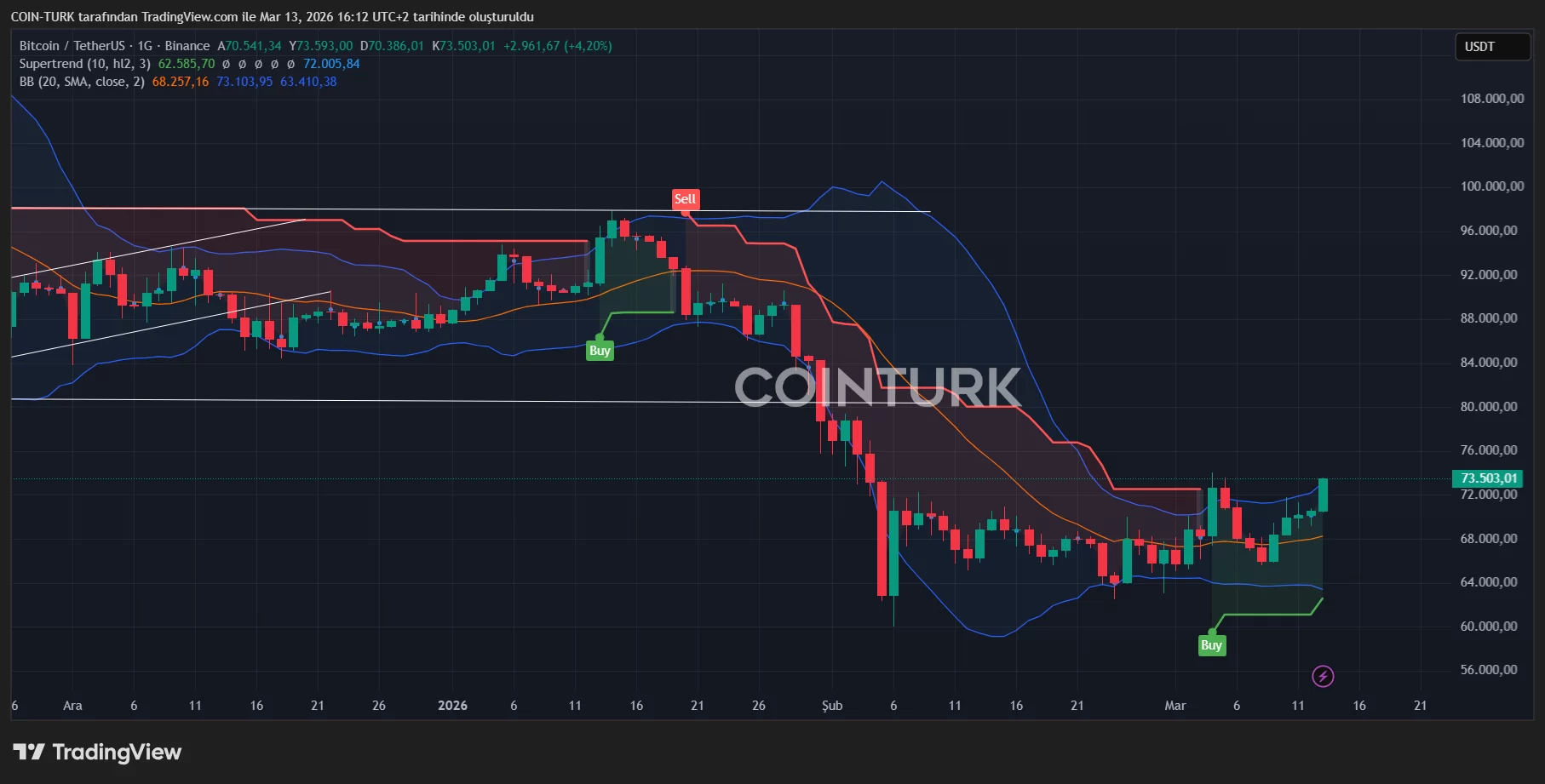
Bitcoin has surged once again, returning to the peak levels witnessed on March 4-5—this time with renewed vigor. While persistent risks continue to unsettle investors, reports released throughout the day have fueled a rally in Bitcoin’s price. Several key economic data points hit the headlines in the past few minutes, with markets quickly digesting their impact. Here’s a closer look at what’s driving the cryptocurrency’s latest movement.
U.S. Numbers Paint Mixed Economic Picture
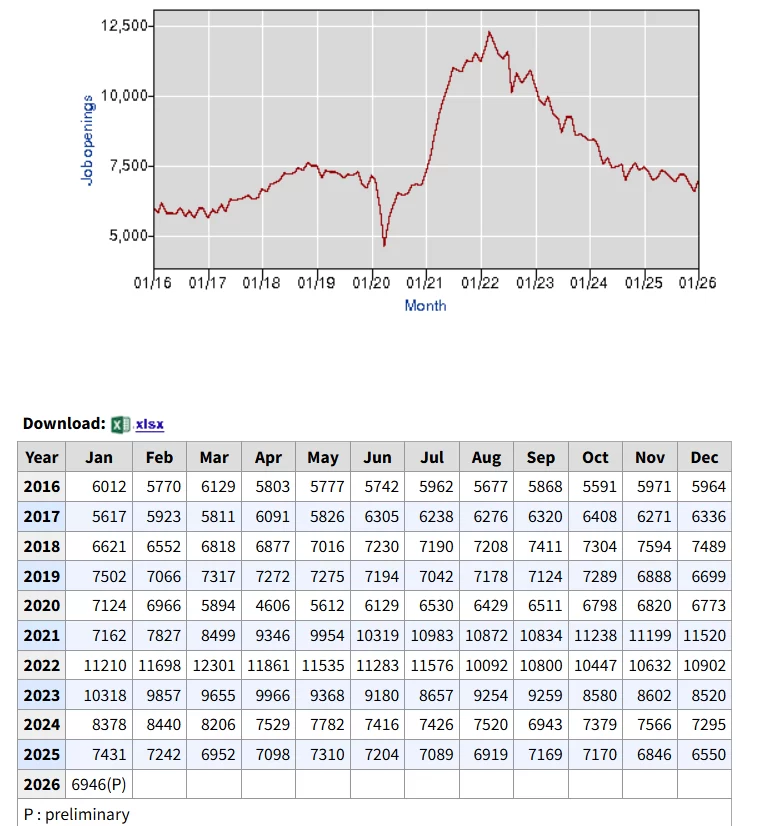
The U.S. Bureau of Labor Statistics published its latest report on job openings, providing insight into the state of the American labor market. Hiring remained steady at 5.3 million, and total separations from jobs held largely unchanged. However, job openings beat expectations, coming in at 6.946 million compared to forecasts of 6.75 million. Notably, the prior month’s figure was revised upward to 6.55 million from the originally reported 6.542 million.
Labor Data Fails to Allay Rate Cut Uncertainty
A glance at the year-on-year decline in job openings underscores the ongoing softness in employment trends, as shown in the chart above. While Bitcoin’s price is making an aggressive push at the $73,500 mark, market participants remain skeptical about any definitive interest rate cuts even as late as September.
In addition to labor figures, traders also eyed the early results of the University of Michigan’s consumer sentiment survey released today.
- University of Michigan Consumer Sentiment Index came in at 55.5 (Forecast: 54.8, Previous: 56.6)
- University of Michigan 1-Year Inflation Expectation: 3.4% (Forecast: 3.7%, Previous: 3.4%)
Expectations for five-year inflation also dipped, scoring lower than last month’s 3.3%. While sharp deviations in preliminary reports are not uncommon, these figures indicate consumers are growing somewhat more optimistic about the inflation outlook.
Consumer confidence dropped by roughly 2%, reaching its lowest point this year. Prior to the military escalation involving Iran, the ongoing survey had actually indicated a rebound in confidence compared to the previous month. However, a nine-day slide following the conflict erased these early gains. Soaring gasoline prices remain the most immediate concern for consumers, yet it’s still unclear how far this will ripple through to other costs. People across income, age, and political groups reported weakened expectations for their personal finances—resulting in a 7.5% national decline. The survey was conducted between February 17 and March 9, with about half after the U.S. military operations in Iran began.
This month, one-year-ahead inflation expectations held steady at 3.4% after six consecutive months of decline. The current figure exceeds levels seen in 2024 and remains well above the 2.3%-3.0% range recorded in the two years prior to the pandemic. Long-term inflation expectations slipped to 3.2%. So far this year, these figures have fluctuated between 2.8% and 3.2%, whereas in 2019 and 2020 they consistently stayed below 2.8%. Notably, surveys conducted after February 28 registered higher inflation expectations than those conducted earlier—refer to the chart’s right panel for more detail.
— Joanne Hsu, Director of Consumer Surveys
While labor market signals and consumer sentiment data are sending somewhat mixed messages, Bitcoin’s rise suggests traders are betting on persistent demand for risk assets. Despite improved inflation expectations among consumers, wage growth and employment stability appear to lag behind hopes for a rapid economic rebound.
Analysts point out that the interplay between the Federal Reserve’s policy stance and real-economy data is weighing heavily on both traditional markets and cryptocurrencies. Although job openings exceeded projections, the labor market overall remains tepid. Cautious optimism is emerging, but conviction about imminent monetary policy easing is not yet widespread.
In the short term, markets will likely continue to keep a close watch on evolving economic indicators and policy signals from major central banks. Bitcoin’s momentum up to $73,500 reflects increased speculation but also heightened sensitivity to macroeconomic shifts. Ongoing geopolitical risks add yet another layer of uncertainty for crypto and equity markets alike.
Overall, the confluence of softer labor data, slightly better inflation outlooks, and ongoing Fed caution is fostering an environment of careful trading. Bitcoin’s latest surge, against this backdrop, underscores both its resilience and its susceptibility to global economic crosscurrents.